

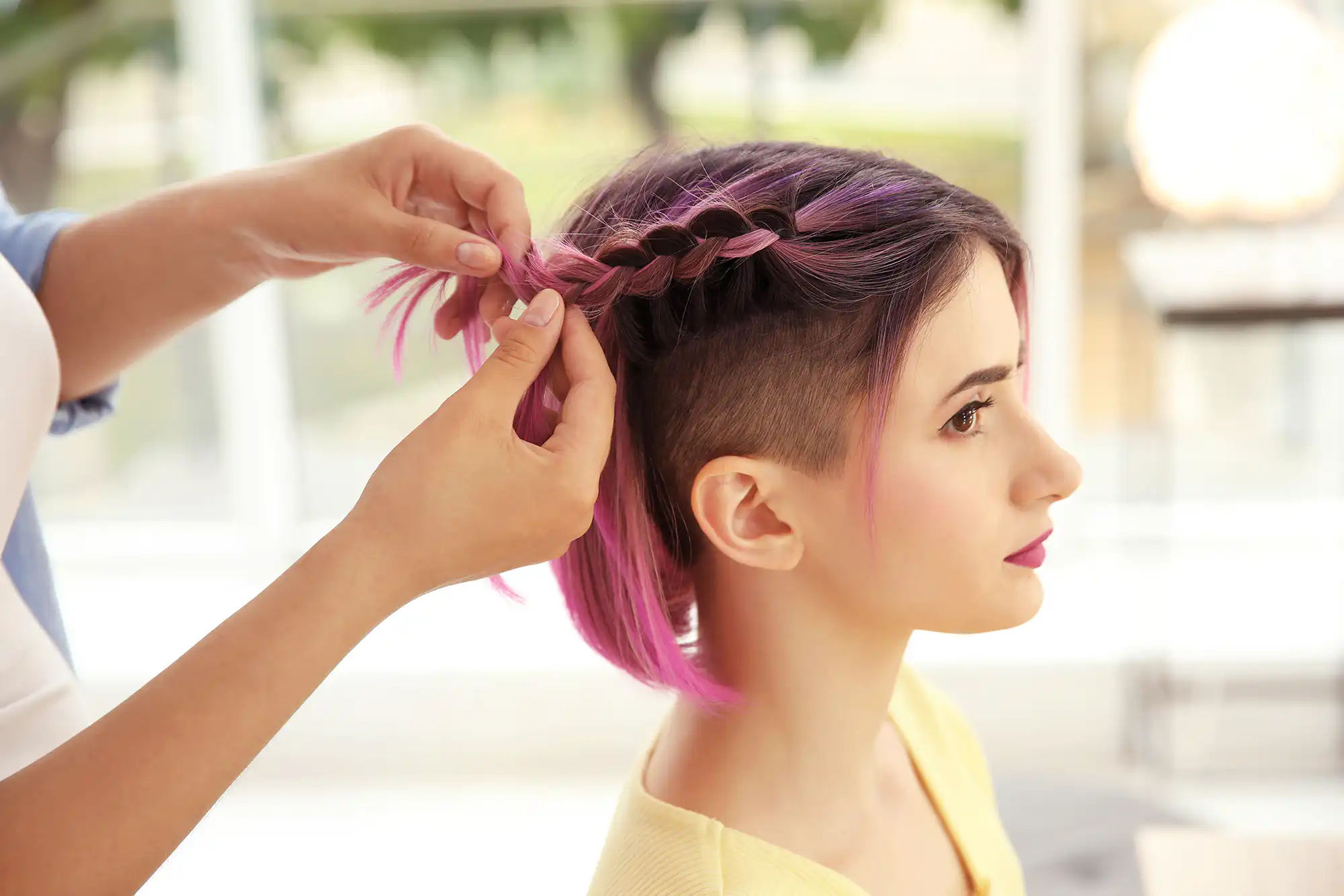
Think about the last time you sat in a stylist’s or barber’s chair. As the cape was fastened and the water started running, what did you talk about?
For generations, salons and barbershops have served as unofficial sanctuaries. They are safe havens where we don’t just get a trim, a fade, or our locs twisted—we vent. We talk about our high-stress weeks, our relationship struggles, our grief, and our anxieties. The physical sensation of having our hair washed and cared for acts as a natural emotional release valve.
But while hair professionals have long played the unofficial role of emotional confidants, they haven’t traditionally been equipped with the clinical tools to handle deep psychological distress.
That is exactly why PsychoHairapy is changing the game. Founded by Dr. Afiya Mbilishaka—a brilliant clinical psychologist, professor, hair historian, and natural hairstylist—this global movement formally defines PsychoHairapy as “the use of hair as an entry point into mental health care.”
By training the beauty industry to recognize emotional distress, this framework is turning community spaces into actual frontlines for mental wellness.
Shifting from “Gossip” to Active, Micro-Counseling
A common Ghanaian proverb says, “When your sister is your hairdresser, you need no mirror.” It highlights the deep, intrinsic trust built into the act of hair care. PsychoHairapy honors this historical, culturally rich bond by teaching hair professionals how to channel that trust into structured, empathetic support.
Through formal certification programs, stylists, barbers, and makeup artists learn to transition from passive listening into micro-counseling. They focus heavily on a few core clinical techniques:
1. Spotting the “Split Ends” of Emotional Distress
Stylists are trained to notice subtle changes in hair and scalp health, but PsychoHairapy trains them to spot changes in psychological health too. This includes tracking shifts in a regular client’s body language, an uncharacteristic tone of voice, a sudden neglect of their personal grooming, or expressions of profound hopelessness.
2. Reflective and Active Listening
Instead of offering generic advice or toxic positivity, certified professionals learn to use reflective listening. By mirroring back a client’s feelings (“It sounds like you felt incredibly unsupported when that happened…”), they provide a high level of emotional validation that calms a hypervigilant nervous system.
3. Culturally Informed Mental Health First Aid
One of PsychoHairapy’s most critical interventions is knowing when and how to refer a client to a licensed therapist. If a client expresses thoughts of self-harm or deep depressive loops, a stylist doesn’t carry that burden alone. They are trained to make a “warm hand-off,” seamlessly providing culturally competent mental health resources right there at the station.
The Cultural Significance of the Black Hair Sanctuary
While PsychoHairapy benefits everyone, its roots are deeply grounded in the psychology and history of Black hair. Dr. Mbilishaka, who has testified before Congress in support of the anti-discrimination CROWN Act, created this framework with a deep awareness of the historical systemic barriers that have kept marginalized communities from seeking traditional therapy.
Traditional psychiatric spaces have historically lacked cultural competence, occasionally leading to misdiagnoses, stigma, or a lack of trust. On the other hand, the barbershop and the salon are culturally affirming environments. They are spaces of resilience, identity, and community.
Why the Entry Point Matters: PsychoHairapy meets people exactly where they already feel safe. It strips away the intimidating clinical walls of a standard psychology clinic and normalizes mental health advocacy amidst the comforting hum of blow dryers and clippers.
The Framework of Care
| Element | Traditional Therapy | PsychoHairapy |
| Setting | Clinical office, couch, strict boundaries. | Salon, barbershop, community activation spaces. |
| Primary Catalyst | Verbal dialogue, psychological assessments. | Tactile hair care, washing, styling, and grooming. |
| Role of Professional | Licensed Clinician (Psychologist/LCSW). | Certified Hair Professional / Mental Health Advocate. |
| Objective | Formal diagnosis, deep psychological processing. | De-escalation, emotional first aid, cultural validation, clinical referral. |
Reimagining the Future of Holistic Wellness
The beauty of PsychoHairapy is that it acknowledges a profound biological and psychological truth: the mind and the body are completely inseparable. Hair loss, hair neglect, and scalp conditions are frequently the physical manifestations of chronic stress, metabolic imbalances, and deep emotional trauma. By addressing the head, PsychoHairapy naturally addresses what is happening inside the head.
As the program continues to grow globally with online, on-demand certifications, we are witnessing a beautiful evolution in the wellness industry. Salons and barbershops are no longer just places we go to fix our outward appearance; they are becoming authentic hubs of holistic healing.
The next time you settle into a stylist’s chair, look at the person standing behind you a little differently. They aren’t just sculpting art with your hair—with the right tools, they might just be helping you weave your pieces back together, one affirming conversation at a time.
